
A community-owned plan to end poverty and disease in Nanderema.
We’re inviting strategic and financing partners into a programme built by nine villages: healthcare, education, safe water and sanitation, and resilient agriculture, anchored by Nanderema’s first community health centre.
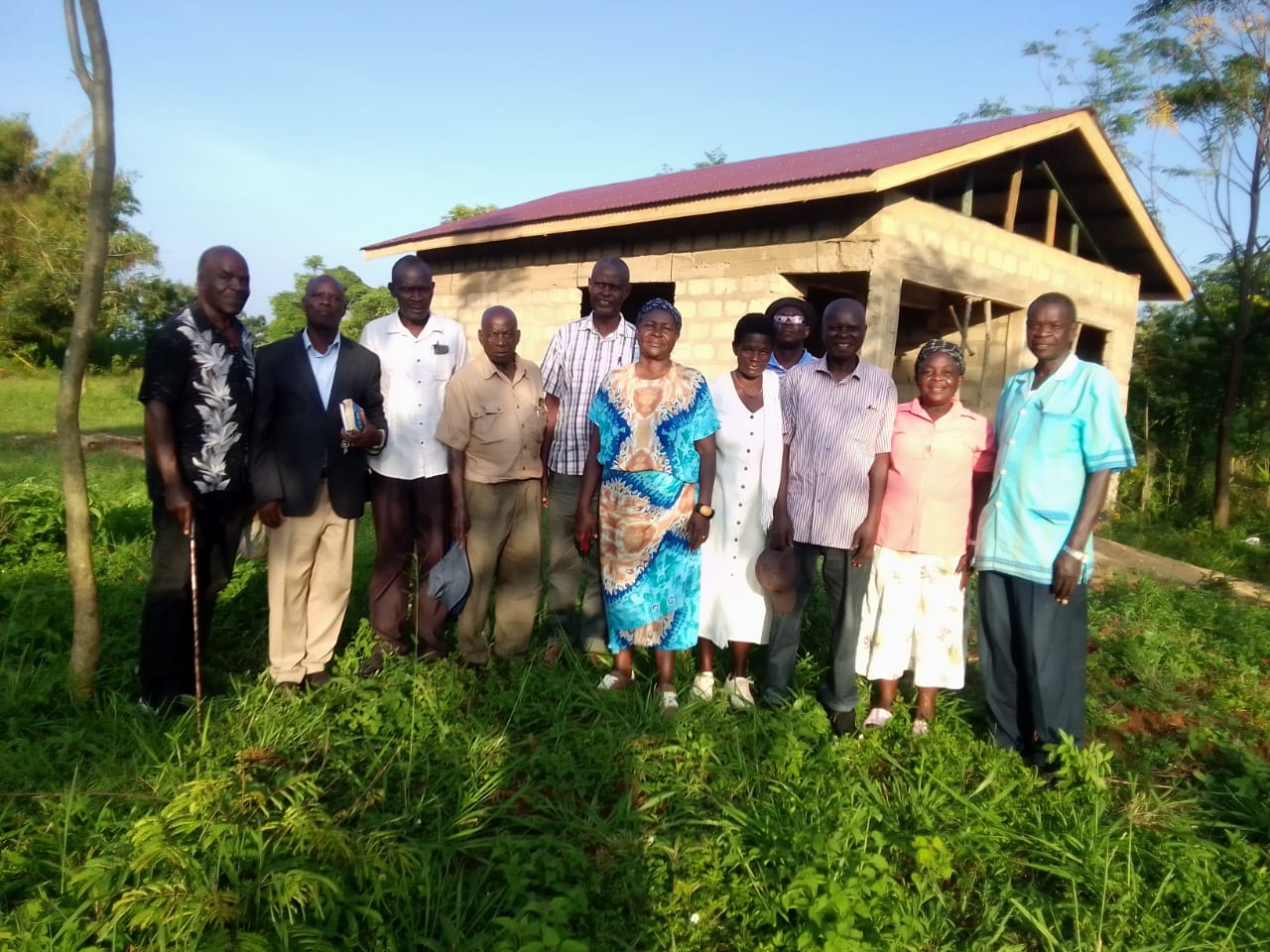
villages behind this plan
residents served
mobilized by the community
of doctors' quarters complete
Organizational overview
Formed by nine villages, registered, and locally led.
Nanderema Development Initiative is a community-based organization formed after extensive consultations involving representatives from nine villages and the local administration. Its constitution was adopted in June 2021 and the organization was registered the following month, giving residents, local leaders and well-wishers a structured way to close persistent development gaps.
Organizational overview
Nanderema Sub-Location has no local health facility. Malaria and typhoid go untreated, child malnutrition persists, and safe water is scarce. Residents travel long distances on difficult roads to reach care, delaying treatment for the most vulnerable. The sub-location includes four primary schools, two secondary schools, churches, government offices and trading centres — an integrated response is the only one that holds.
Vision
A healthy, educated, food-secure and economically resilient Nanderema community.
Mission
Mobilize communities and partners to deliver sustainable improvements in health, education, water and agriculture.
Strategic programme pillars
Four pillars, one integrated outcome.
Healthcare outcomes can’t be sustained without safe water, adequate nutrition, education and resilient livelihoods — so each pillar is designed to reinforce the others.
3.1 — Health & Nutrition
Anchor investment
Improve access to essential healthcare and reduce preventable illness and malnutrition.
- Complete, equip and operationalize the community health centre, including staff accommodation and support facilities.
- Support community health outreach, health education, disease prevention, and referral.
- Strengthen maternal and child health, nutrition screening and counselling for vulnerable groups.
- Promote household knowledge and practices on nutrition, hygiene and wellbeing.
Result: earlier access to care, stronger prevention, reduced disease and malnutrition
3.2 — Education
Learning environments
Expand equitable access to safe, inclusive and quality learning opportunities.
- Improve priority school and classroom infrastructure with education authorities and communities.
- Provide learning materials and equipment to underserved schools and learners.
- Support teacher development and initiatives that strengthen attendance and retention.
- Integrate school health, nutrition, water and sanitation actions where feasible.
Result: earlier access to care, stronger prevention, reduced disease and malnutrition
3.3 – Water & Sanitation
Safe, dignified access
Increase sustainable access to safe water, dignified sanitation and improved hygiene.
- Develop and rehabilitate climate-resilient water sources, storage and distribution systems.
- Construct or improve sanitation and handwashing facilities at institutions and public sites.
- Promote hygiene education, safe water handling and community-led water quality monitoring.
- Establish accountable operations and maintenance arrangements.
Result: safer water and sanitation, less exposure to water-borne disease
3.4 — Agriculture & Food Security
Resilient livelihoods
Strengthen household food security, nutrition and income through sustainable agriculture.
- Train farmers in climate-responsive production, soil and water management, and diversified farming.
- Improve access to appropriate inputs, tools, technologies and extension support.
- Promote nutrition-sensitive agriculture and post-harvest management.
- Strengthen farmer groups, aggregation and market linkages.
Result: resilient production, better food security, stronger livelihoods
Delivery & sustainability approach
Built for community ownership, not dependency.

Community ownership
Priorities are identified and implemented with residents, village representatives and local administration.

Government alignment
Infrastructure and services are planned with county and national authorities to meet applicable standards and ensure continuity.

Integrated delivery
The four pillars are coordinated to maximize shared outcomes — for example, linking nutrition, school WASH and agriculture.

Partnership & accountability
Donor resources are supported by agreed work plans, budgets, procurement controls and transparent financial management.

Sustainability
Every intervention includes clear arrangements for ownership, operations, maintenance and community participation.
Community investment & readiness
The community moved first.
Before asking partners to invest, Nanderema invested in itself — through fundraisers, land acquisition and early construction.
| Milestone | Status |
|---|---|
| Community funds mobilized through fundraisers, committee members and well-wishers | KSh 2,130,540 |
| Land acquired at Sibina Village | 0.3 hectares |
| Main hospital architectural designs, drawings and approvals | Completed |
| Site fencing and gate | Completed |
| Doctors' quarters | 60% complete |
| Website | Developed and maintained |
Resource mobilization & progress
Where every shilling has gone.
Three community fundraisers in 2021, 2023 and 2024 raised KSh 1,917,440. In 2025, committee members and well-wishers contributed a further KSh 213,100 — bringing total funds mobilized to KSh 2,130,540 against expenditure of KSh 2,103,305.
Partnership & financing opportunities
Where a partner’s support goes furthest.
Capital investment to complete and equip the health centre and supporting infrastructure.
Safe water, sanitation and hygiene systems for the health facility, schools and surrounding communities.
Health, nutrition, education and agricultural equipment, supplies and technical assistance.
Institutional strengthening — governance, financial management, safeguarding, monitoring and reporting.
Co-design of a phased implementation plan, results framework, detailed budget and sustainability model.
Grants, blended support and in-kind contributions aligned to any one of the four programme pillars.
Partnership & financing opportunities
Where a partner’s support goes furthest.
For each financed intervention, we agree a baseline, beneficiary targets, milestones and indicators with our partner — and report on delivery, expenditure and impact throughout. Independent verification can be arranged where required.